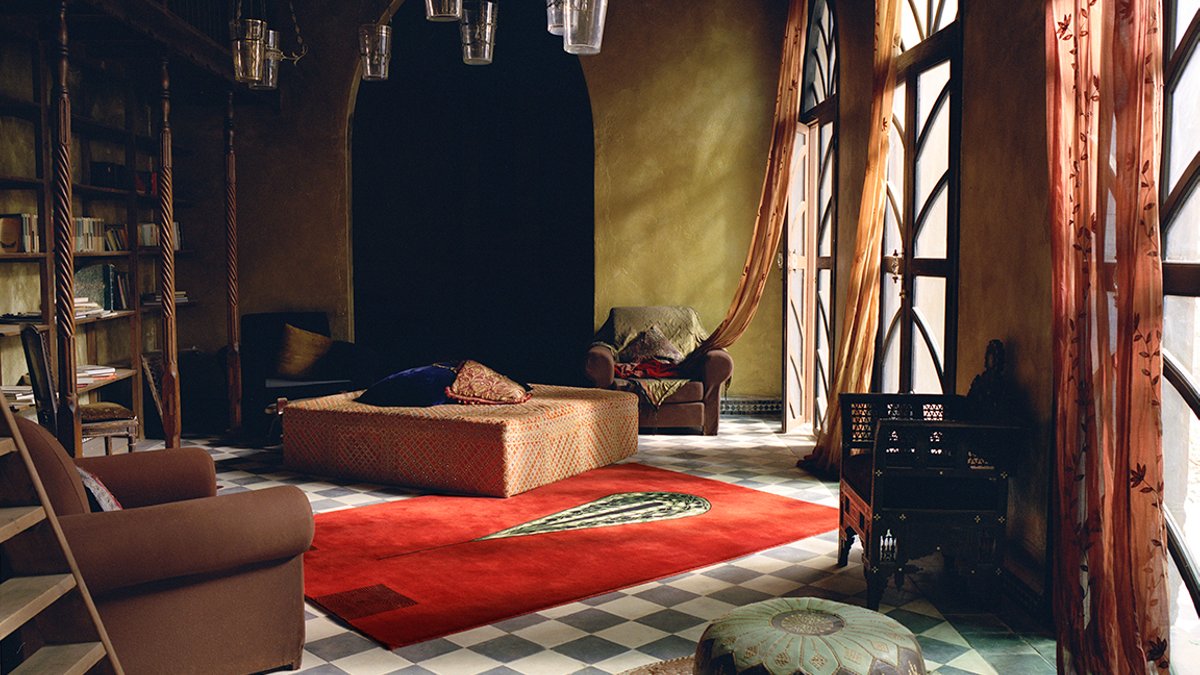
In contemporary interior design, the rug has evolved beyond its traditional role as a simple floor covering. Today, leading figures in architecture, design, and fine art are treating the floor as a horizontal canvas for bold artistic expression, transforming rugs into statements of cultural and personal narrative.
Contemporary Rug Collections Redefine Floor as Artistic Canvas
Across ten recent collections, historic craftsmanship converges with cutting-edge design techniques, producing floor coverings that rival framed gallery pieces in artistic ambition. From hand-knotted silk to computationally generated patterns, these releases showcase how rugs can anchor entire rooms while introducing unexpected visual depth.
The eight designs draw from European garden architecture, translating wrought-iron motifs and ornamental details into contemporary compositions using deep blacks, browns, and greens.
Craft Meets Contemporary Design
Stockholm’s Nordic Knots introduces Dancing Flower and Matches, inspired by the 1920s Swedish Grace movement. Crafted from wool with touches of bamboo silk, Dancing Flower presents organic botanical patterns while Matches employs rhythmic geometry, both celebrating Sweden’s decorative arts heritage through rich, tactile surfaces.
Hand-knotted in India, each piece creates a luminous field of color that shifts with ambient light. Available in five stocked colorways including Biscuit and Vermilion, alongside 15 made-to-order hues, the low-pile designs demonstrate how monochromatic surfaces can warm living spaces.
The Rug Company’s Silk Textures collection, part of its Colour in Residence series, explores silk’s expressive qualities through 20 handmade rugs. The Vara finish combines handloomed wool and silk for gentle irregularity, while Caliche offers a luminous 100% silk weave. Colors draw from mineral tones like earthy clay and tranquil sage, creating subtle variations in texture and sheen.
Using durable abaca, the collection translates techniques like Italian marbled paper and straw marquetry into bold, graphic designs. Each piece functions as an individual work of art, leveraging abaca’s natural sheen and dimensional texture rather than following conventional repeating patterns.
Artistic Collaborations Redefine Rugs
Interior designer Sara Story collaborates with Christopher Farr on Hill Country, a three-piece collection rooted in personal memory. Hand-knotted in wool and silk, Spider, Environment, and Grid reference the sun-washed Texas terrain of Story’s upbringing and Louise Bourgeois’ monumental spider sculptures. The Spider design uses raised lines to suggest arachnid form without literal reproduction.
Designs like Echo and Rooted translate organic compositions into tactile surfaces using hand-tufting, hand-knotting, and sculptural relief techniques.
Jaipur Living’s CallaLuxe collection demonstrates how expressive design can coexist with everyday practicality through 75 patterns incorporating solution-dyed fibers. Produced via hand-knotting, hand-tufting, and handweaving, the rugs offer rich patterns and dimensional textures suitable for high-traffic areas without sacrificing visual appeal.
Developed for an outdoor exhibition in Sonoma, California, Nomadory’s Plot rug responds to the relationship between natural growth and built geometry. Created with artist Gigi Allen, the design draws from rectangular planter boxes and organic forms emerging within them. Subtle pile height variations and contrasting stitch patterns translate this juxtaposition into a woven surface made from recycled polyester for outdoor use.
Technology and Tradition Converge
Inspired by microscopic biological structures including butterfly wings and coral, the six designs use digitally generated compositions as guides for artisans in Nepal. Each 2-by-3-meter rug requires approximately 1.8 million individual knots in Himalayan wool and Chinese silk, with material contrast and color shifts evoking natural iridescence.
Craft Techniques Meet Modern Design Methods
Each collection balances traditional handwork with contemporary production methods. These partnerships preserve age-old techniques while adapting them to modern aesthetics and living spaces.
Personal narratives and natural forms drive several collections. The connection between memory and material becomes a central theme.


