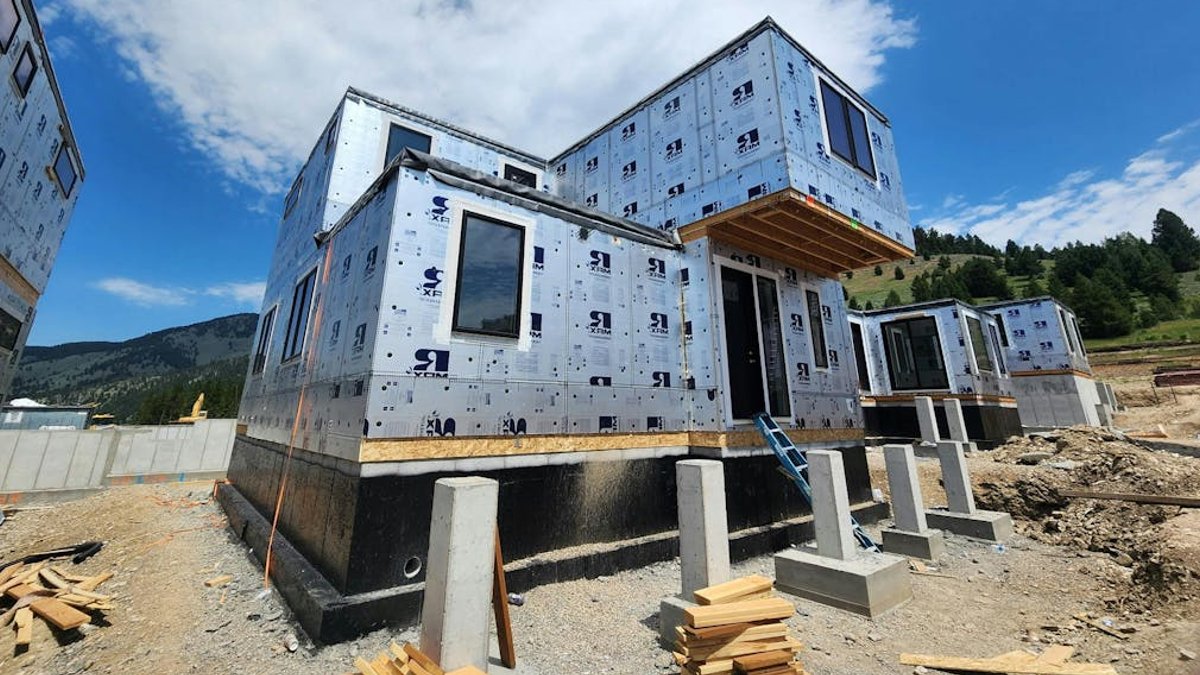
The latest International Energy Conservation Code (IECC) and International Residential Code (IRC) have significantly tightened energy efficiency standards, particularly for the walls of modular homes. One key change is the increased emphasis on continuous insulation (CI), a layer that wraps around buildings to reduce heat loss and gain. This is key as current framing methods can create thermal bridges where heat can escape.
CI is like giving your modular home a sweater, wrapping the entire structure in insulation to prevent heat loss in the winter and keep things cool in the summer. It blocks thermal bridges that can form around studs or metal framing. Recent versions of the IECC and IRC have placed even greater emphasis on CI, particularly in certain climates.
Both offsite and traditional stick-built homes must meet the same stringent energy standards. However, modular builders must find ways to incorporate CI without slowing down production or blowing the budget. Unlike traditional construction, modular builders often can’t rely on performance methods like high-performance mechanical systems or solar panels. As such, upgrading the building envelope through CI becomes a primary focus.
Related: Housing shortage keeps labor pool permanently shrinking
Builders can choose to install CI on the outside of wall sheathing or integrate it within the wall panel itself. The former is more common as it covers all structural elements and helps prevent heat loss.
When it comes to building homes, the rules have changed, literally. And they keep changing. The latest International Energy Conservation Code (IECC) and International Residential Code (IRC) have tightened up the standards for energy efficiency, especially when it comes to the walls of your building. If you build modular homes, it’s key to get up to speed on these changes, particularly the requirements around the use of continuous insulation (CI). Continuous insulation is a bit like giving your homes a sweater: it wraps the entire structure in a layer of insulation, reducing heat loss in the winter and keeping things cool in the summer. This additional layer is especially important because current framing methods, whether stick-built or in a factory, can create thermal bridges where heat can sneak through, such as around studs or metal framing. CI blocks those bridges . The most recent versions of the IECC and IRC codes have put a much bigger emphasis on CI, particularly in certain climates. Both offsite and traditional stick builders are held to the same stringent energy standards, but for those in modular construction, where production and cost efficiency is the name of the game, figuring out how to add CI without slowing down the process or blowing the budget is key.


