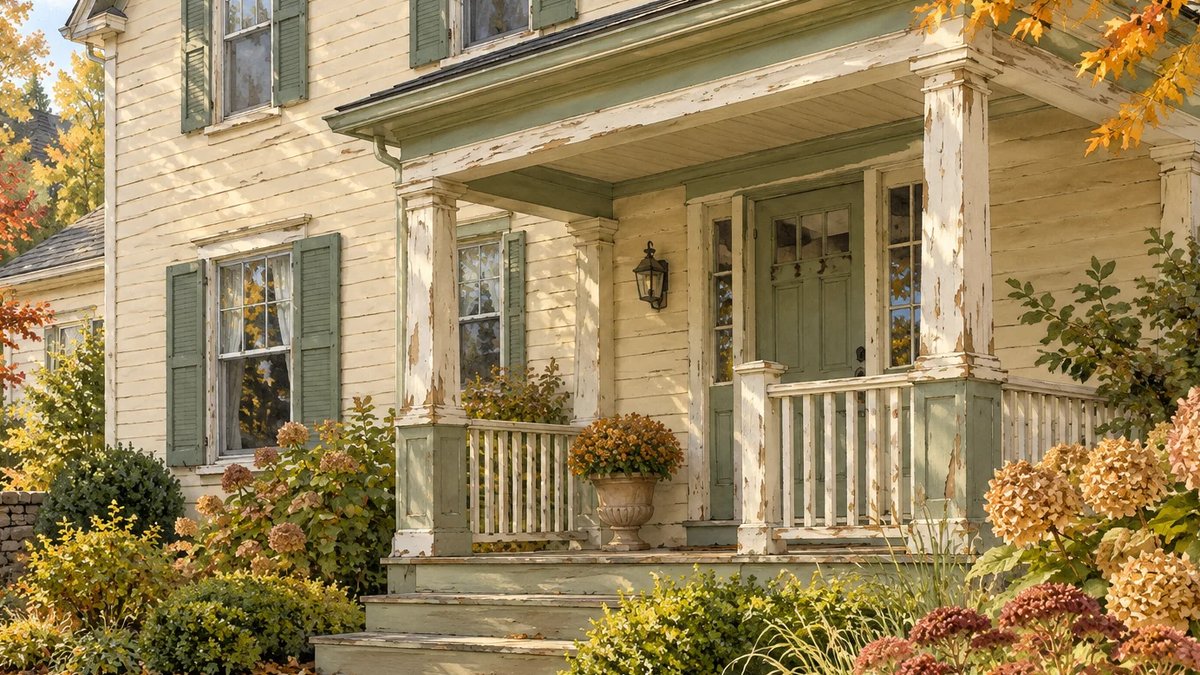
Choosing a new exterior paint shade works best when homeowners first understand why the current finish is failing and how the surface will be prepared.
Assessing the Existing Exterior
Walk the house at ground level and photograph peeling paint, stains, open joints, and any visibly deteriorated trim. Record recurring problem spots and note whether nearby gutters, roof details, or landscaping might affect the repair work.
Ask the contractor which issues can be judged by sight and which require closer inspection. Distinguish a coating failure from damage to the underlying substrate, and confirm who will handle any needed wood or material repairs.
Lead-Safe Considerations for Older Homes
For homes built before 1978, review EPA’s lead-safe renovation guidance before work begins. Disturbing old paint can release lead dust; the contractor should explain how certification, containment, and cleanup will be managed.
Even outdoor work can affect nearby windows, doors, planting beds, and play areas. Make sure the written scope includes protection measures for these elements and details how access routes will be kept clear.
Scheduling, Weather, and Product Details
Request a plain-language description of each preparation step: cleaning, removal of failing material, repairs, priming, and joint treatment for every surface type. Different materials may need distinct approaches, so ask for the exact product system and the manufacturer’s instructions.
Read Also: Plan ahead to control dust during home renovations
Clarify what the contract does not cover. Replacing a rotted board, fixing a leak, and painting a sound surface are separate tasks; any condition outside the agreed scope should be documented and resolved before the finish conceals it.
Discuss temperature, moisture, and curing requirements for the selected coating. They should explain how the schedule will adapt to rain, cool nights, or a surface that isn’t ready for coating, rather than relying on a fixed season or calendar date.
Plan for access equipment, protection of outdoor belongings, and vehicle or material placement around the house. If the project pauses, the crew will need a clear plan for storing prepared surfaces and tools between visits.
After preparation questions are answered, review paint samples in various lighting conditions and alongside the roof, masonry, and other fixed elements. Digital renderings can narrow choices, while physical swatches let owners judge the actual combination on site.
When the work is complete, keep records of product names, colors, sheen, and maintenance instructions. Walk the finished scope with the contractor, note any remaining items, and retain documentation for future reference.


