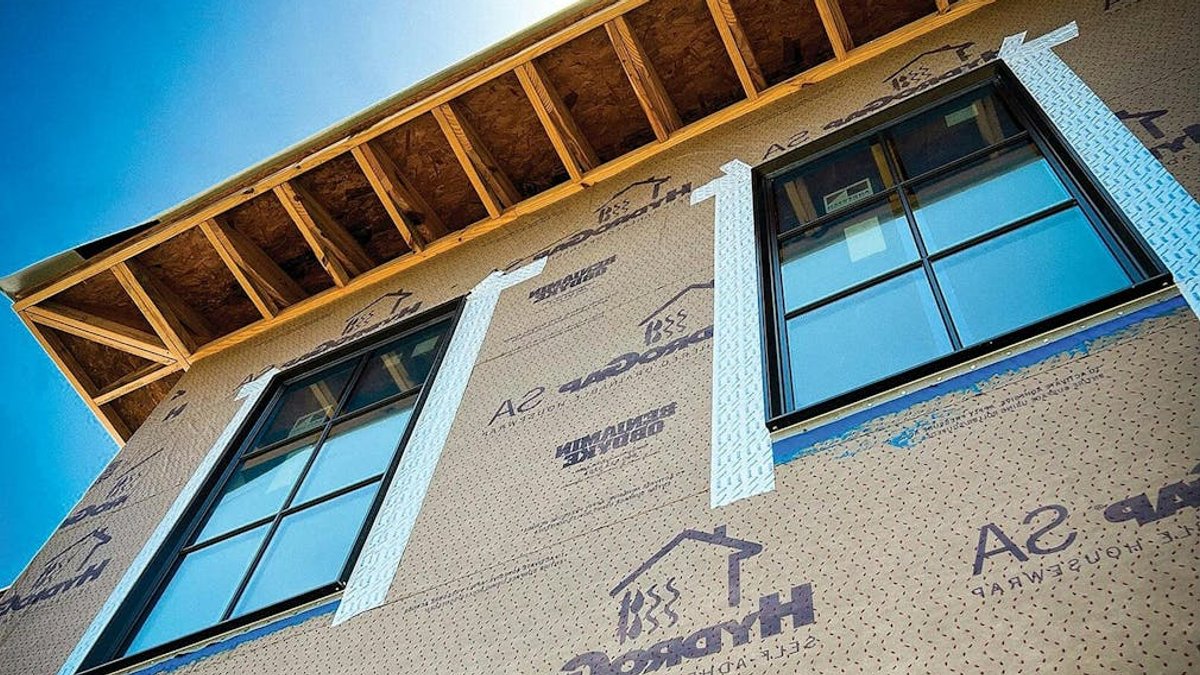
Windows rank among the most vulnerable parts of any building envelope, frequently becoming the first point of failure when moisture infiltrates a structure. Yet proper window flashing techniques can change that outcome significantly.
Material Selection and Compatibility
When flashing windows, the window’s material—wood, fiberglass, or vinyl—does not dictate the flashing method itself. What it does influence is the type of flashing product chosen. Compatibility between flashing materials and surrounding components matters most. Some manufacturers specifically advise against asphalt-based flashing tapes with PVC nail flanges.
The sealant used behind the nail flange also requires scrutiny, since certain combinations can degrade over time or react poorly with the flashing, the weather resistive barrier, or the window’s finish coating. Checking product specifications before installation prevents callbacks and premature failures.
Flanged and Non-Flanged Options
Most windows fall into two categories: flanged units with nailing fins, or non-flanged designs common in retrofit work. The distinction matters because flashing approaches differ. Flanged windows may use integral or non-integral nail flanges, and that variation affects installation sequence.
Related: Embracing Continuous Insulation in Modular Homes
Windows with non-integral flanges often require flashing directly onto the frame using tape, liquid-applied products, or both. Some manufacturers specify a double bead of sealant behind the flange. Non-flanged windows rely more heavily on sealant beads or liquid-applied flashing, with a backer rod becoming essential in these applications.
When pre-cased units are involved, exterior detailing may need to happen from the interior side, which complicates inspection. Local building departments can clarify requirements for specific jurisdictions. Liquid-applied flashing offers advantages in coverage quality and speed, particularly around complex geometries.
Handling Specialty Window Shapes
Round or arched windows present particular challenges. Straight flashing tape demands extensive cutting and trimming to conform to curved geometry. Liquid-applied flashing spreads more easily around curves and irregular shapes, creating a continuous seal that resists water intrusion more reliably.
Flashing With Continuous Exterior Insulation
Continuous exterior insulation shifts the water control layer to a different plane than the window opening. That offset creates a gap between the weather resistive barrier and the window that must be bridged properly for the drainage plane to function.
Related: The Art of Balcony Blinds – Elegant Aesthetics and Comfort
For recessed or “innie” windows, larger trim pieces or metal flashing compensate for added wall thickness. One approach involves installing housewrap on the structural sheathing aligned with the window, then applying traditional flashing methods.
Projected or “outie” windows have rough framing extended to match the insulation plane. Installers have two main paths: applying the weather resistive barrier over the insulation panel to maintain alignment, or using a drainable housewrap between sheathing and insulation to provide a pathway for incidental moisture to escape.
When the weather resistive barrier sits against sheathing with a window buck creating a gap, flashing sequence becomes critical. Installers must work from the bottom upward, shingle-lapping each layer, and ensure continuity where the housewrap ends and flashing takes over as the primary water control layer.
Liquid flashing simplifies these details by creating a monolithic seal around complex intersections and angles. The Building Science Digest on exterior wall flashing covers these sequencing principles in greater detail. Whatever the approach, verifying compatibility between all products in the assembly remains essential before work begins.


