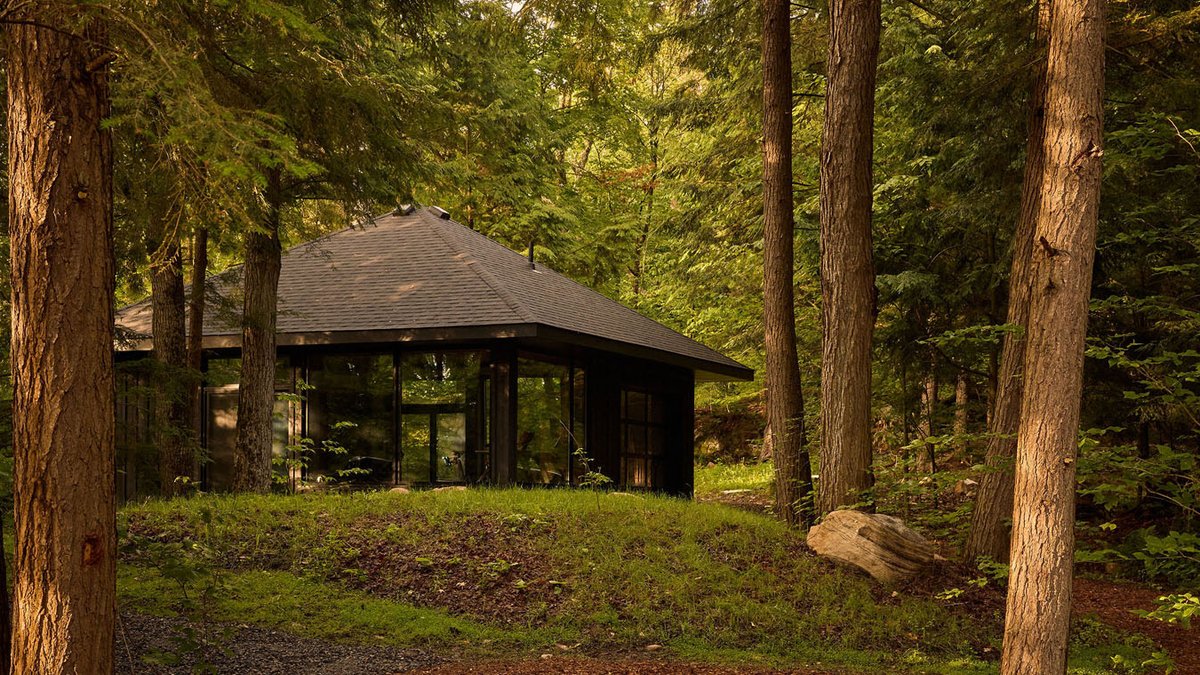
Originally built in the 1950s as a Pan-Abode, this Muskoka retreat has undergone careful restoration and enlargement, preserving the character of its original architecture while introducing a contemporary sensibility. The design blends rustic charm with a refined interpretation of the Canadian cottage vernacular, seamlessly merging natural materials with modern design.
Interior designer Lisa Worth notes that the cottage is situated in a natural setting with towering trees, raw natural beauty, and abundant wildlife, creating an atmosphere that is both peaceful and quintessentially Canadian.
The clients are empty nesters who spend their summers and falls in Canada, and they wanted to remodel their Muskoka cottage to better suit their expanding extended family. According to Lisa Worth, the previous cabin had served them well, but its intimate footprint could no longer accommodate how they lived and gathered.
The vision was to create a more generous retreat with additional spaces for family and friends to gather, plus a private principal suite. Lisa Worth had to balance the home’s modern architecture and rugged Muskoka environment with softness and warmth, creating interiors that felt inviting, layered, and effortlessly comfortable.
Architecturally, the new sections take a distinctly modern direction, with each room retaining its own identity while establishing a strong visual dialogue between old and new. The original cottage flooring extends seamlessly into the additions, creating a subtle sense of cohesion and flow.
The project was completed in just one year, and the owners are thrilled with the outcome. They state that the design team improved upon the original, creating a beautiful, peaceful atmosphere specifically for how they use the home, while blending naturally into the environment.
The final design shows a layered relationship between contrasting architectural expressions, modern and nostalgic, unified by a considered material palette. As Lisa Worth states, ‘Material continuity became the thread and the connection.’


