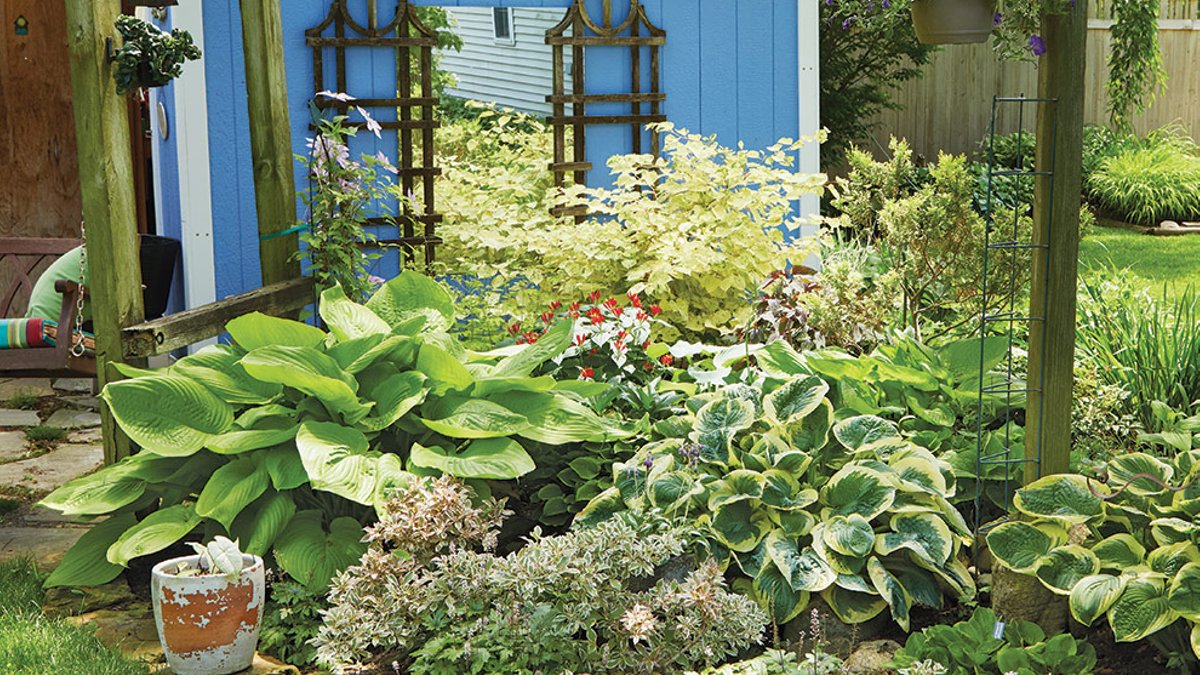
A shade garden bed featuring variegated weigela and hostas can bring color and texture to part to full shade areas. This perennial garden layout creates layers of eye-catching foliage, with a mix of hosta varieties and unique cultivars that pollinators will love.
Designing a Shade Garden Bed
Large, broad-leaved hostas form a solid background in this shady bed, making a statement with their texture and color. For contrast, finer-textured ‘My Monet’ weigela’s pink spring blooms and blushing variegated foliage highlight the front of the bed.
Native spigelia lends a pop of bright red that appeals to hummingbirds, adding to the bed’s visual interest. To showcase small hostas, they can be planted in containers, such as the tiny ‘Winsome’ hosta tucked into a tall, slender container, or the ‘Frosted Mouse Ears’ dwarf hosta in a low hypertufa container.
Plant Care and Maintenance
To prevent scorching on the leaves, it is essential to choose a spot with afternoon shade and keep the soil evenly moist. Dead perennial foliage should be cut back in early spring as new growth begins to appear. Damaged weigela branches should be removed before the plant leafs out, but pruning should be held off until after it blooms to avoid removing flower buds.
Read Also: MA House blends subtle contrasts for timeless Istanbul living
A variety of plants with variegated foliage can be used in a shade garden bed, including hostas, weigela, and spigelia. These plants offer a range of textures, colors, and contrasts that can add visual interest to the bed.
Plant List
The following plants are suitable for a shade garden bed: Hosta ‘Lakeside Cupid’s Cup’, Hosta ‘Sum and Substance’, Spigelia marilandica, Weigela florida My Monet, Tiarella ‘Starfish’, and Hosta ‘Frosted Mouse Ears’. These plants are cold hardy in various USDA zones and offer a range of growth habits and flower colors.
In terms of similar garden designs, this shade garden bed layout is reminiscent of other perennial gardens that prioritize texture and color. By incorporating a mix of plant varieties and textures, gardeners can create a unique and visually appealing space that attracts pollinators and adds interest to part to full shade areas.


