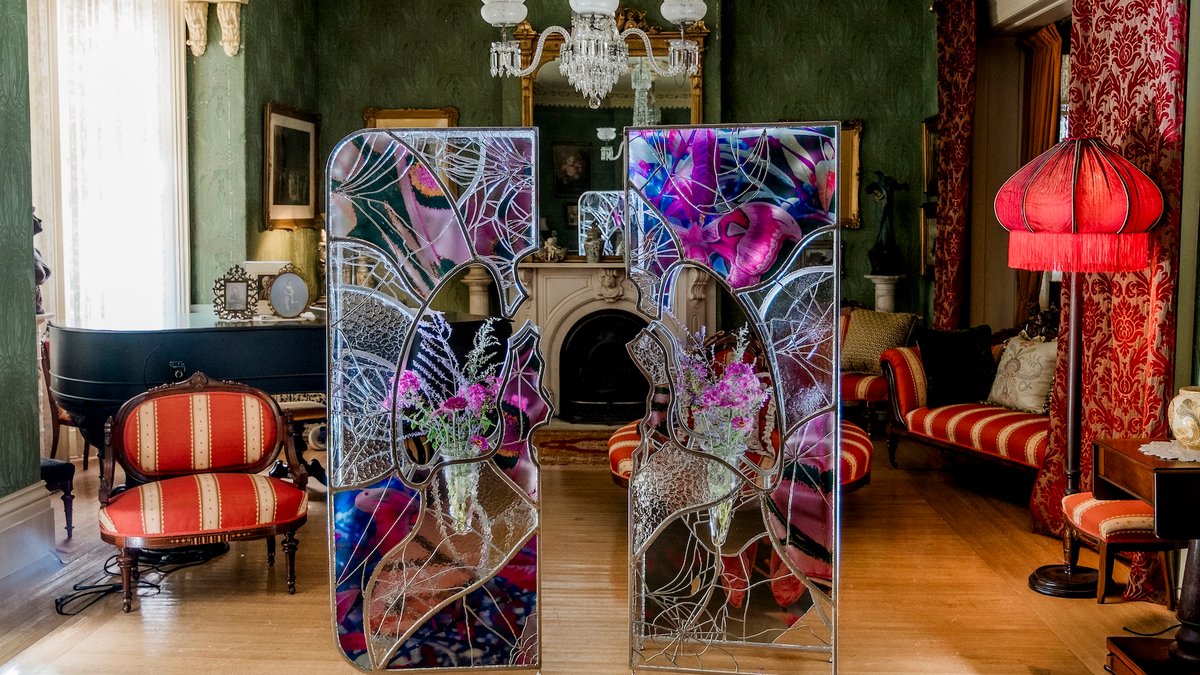
A shattered mirror, restored with solder and stained glass, anchors Ry Van Der Hout‘s current exhibition at Toronto’s Spadina Museum. Titled In Broken Light, the show opened on August 26 and continues until October 18. It transforms the 1866 mansion into a gallery exploring fractured narratives, both personal and historical, through five installations featuring mirrors, glass, and photography. Each piece examines how broken elements can expose what was previously obscured.
The artist initiates every work by deliberately shattering glass before reconstructing it using Tiffany stained-glass techniques. Curator Adrien Sun Hall notes that the resulting surfaces act as portals, with fractures serving as openings through which overlooked histories emerge. These pieces also function as contemporary reliquaries, preserving accounts of queer identity, family trauma, and forgotten lives. The research behind the exhibition included discussions with spiritual leaders, historians, and descendants of the mansion’s former residents, individuals whose stories, from forbidden relationships to fatal illnesses, often resemble fiction.
Read Also: Bogotá Penthouse Blends Family History, Art, and Nature
One installation in the basement repurposes a spinning disco ball, its reflections projected onto stone walls and sealed windows. The piece incorporates a NASA-produced audio track while casting fragmented light across an archaeological dig site preserved beneath. Upstairs, a stained-glass sculpture, created from a reclaimed antique mirror holder salvaged from a dumpster, displays photographs of Tiber, a museum interpreter. The deliberate imperfections in the work parallel how personal narratives resist seamless reconstruction.
The exhibition’s focal point is Open Wing Death, a 12-foot-high geodesic dome placed on the third floor. Originally constructed in 1913 as a sunlit sanctuary for a tuberculosis patient, the room later served as living quarters for domestic staff. The sculpture’s mirrored facets distort reflections, causing viewers to briefly perceive themselves as strangers before recognition resumes. Van Der Hout says, “It felt like I got pulled into this story of an object guiding you to tell you that you are in the right place.”


